From photo to box: KitGenie turns visual AI into a school-shopping tool that promises to halve spending
🕒 Published on AI Momentum: July 1, 2026 · 00:35
Impacks, a Minnesota company, launches KitGenie: a parent photographs the school supply list and the AI assembles and ships the kit in under five minutes. The average price is around $66, versus the more than $140 an average American family spends.
By Momentum IA · June 30, 2026.
Every September, millions of families repeat the same ritual: look for the school supply list, browse several stores, compare brands and end up paying more than expected. Impacks, a company in Waite Park (Minnesota) with six years of history preparing school kits for educational centers, has just launched KitGenie with the aim of settling that process in under five minutes.
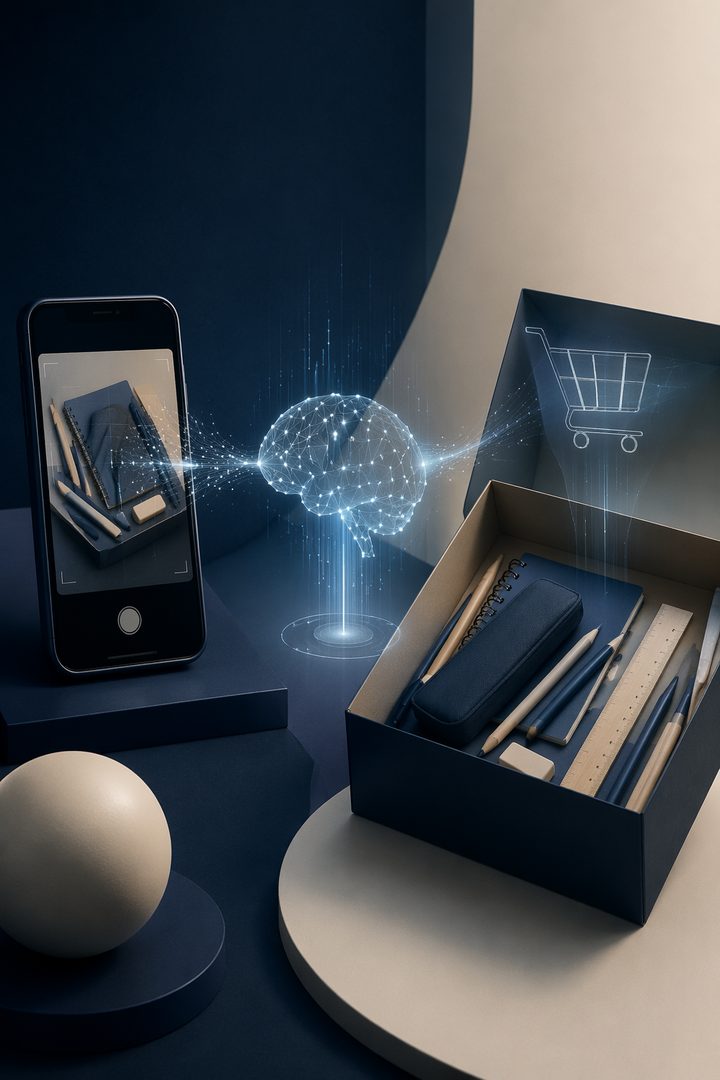
The operation is straightforward: the parent uploads a photo or image of the supply list the teacher has sent, and the image analysis system reads the items and quantities, assembles a kit of branded supplies and prepares it for free home delivery. Users can remove items they already have at home before confirming the order. The average cost of the resulting kit is, according to the company, around 66 dollars. To put that figure in context, the National Retail Federation recorded in 2025 that the average U.S. family spends more than 140 dollars a year on school supplies.
Until now, Impacks operated mainly through agreements with schools and school districts, building kits tailored by grade. KitGenie changes the model: the center no longer needs to have an agreement with the company. Any parent in the country can use it, with any list, at any school. It is the leap from institutional B2B to mass B2C, using AI as a lever.
**What this launch says about the state of applied AI**
There is a clear trend that KitGenie illustrates well: visual AI is moving down from the labs to everyday shopping. The «photo → comprehension → action» pattern—which we already see in medical image diagnosis, industrial inspection or visual product search—is beginning to appear in low-risk but high-frequency household tasks. That is relevant because frequency is precisely where automation generates real accumulated value for non-technical users.
In this particular case, the promise of cutting spending in half is the most powerful argument, if it holds up in practice. The difference between 66 and 140 dollars is not trivial for many families, especially in a context where inflationary pressure on household budgets has not entirely disappeared. If the system is capable of reading lists in varied formats—printed, handwritten, PDFs from different schools—with enough accuracy to avoid constant corrections, it will have solved a real problem.
Our reading is that this type of product represents exactly the kind of AI that most easily builds popular trust: it replaces no one, generates no philosophical controversy, threatens no visible jobs. It simply reduces friction in an annoying and expensive task. The risk for Impacks is competitive, not technical: retail giants with similar vision capabilities (Amazon, Walmart) could replicate the functionality within months if the market justifies it. Impacks's advantage is that it has spent six years building relationships with schools and knows supply catalogs with a level of detail that cannot be improvised.
In the long term, tools like this point toward something broader: the home where buying routine goods becomes almost fully automated, freeing up time and reducing the cognitive cost of minor decisions. It is not a distant or grandiose horizon; it is AI fulfilling its most prosaic and most useful promise, that people can devote their attention to what matters, not to comparing the prices of markers.